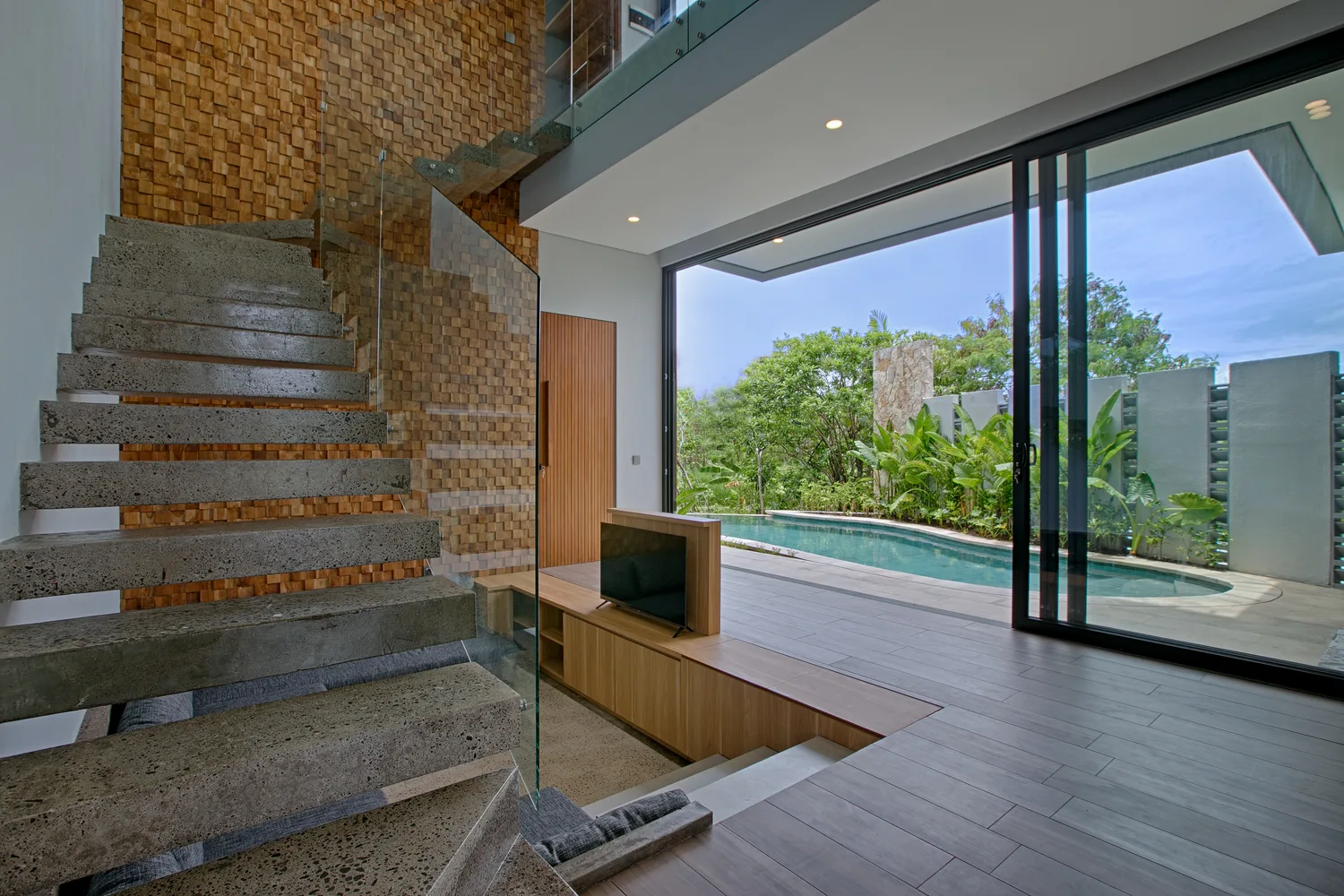
Many Bali villas have a feature that no amount of interior styling can replicate: an elevated position with a view. Rooftop terraces are common in Seminyak and Kerobokan, where double-storey villas make use of vertical space. Upper-level pools are a signature of Uluwatu and Bukit cliff-top properties. Elevated jungle or rice field views define many of the most sought-after villas in Ubud and Tegallalang.
In each case, the rooftop or upper-level space is frequently the reason a guest books the villa — and frequently the most poorly photographed asset in the listing. Getting this right is not just an aesthetic matter. It is a commercial one.
Why Rooftop Photography Is So Often Done Poorly
Three technical challenges make rooftop and elevated photography harder than interior shoots, and they explain why even otherwise decent photo sets often have weak rooftop images.
The sky exposure problem. Any rooftop shot that includes sky — which is almost all of them — presents an extreme dynamic range challenge. Expose correctly for the terrace furniture and flooring, and the sky blows out to a white void. Expose for the sky, and the terrace falls into shadow. Neither result looks like what the human eye sees standing on the rooftop at 4pm.
There are two professional solutions to this. The first is shooting at blue hour — the 20 to 30 minute window after sunset (or before sunrise) when the ambient light and the sky light reach approximate parity, and the sky takes on a deep blue-indigo tone that photographs beautifully without blowing out. The second is professional sky replacement in post-processing, where a captured-separately sky is composited into the image at the correct exposure. Both require intention and technical skill. Neither is something a phone camera handles automatically.
Wind and staging instability. Styling a rooftop for photography presents logistical challenges that interior shoots do not. Lightweight cushions move. Candles are unusable. Sarongs and fabrics billow. The careful arrangement of a terrace tablescape that looks perfect at ground level can be undone by a 15-kilometre-per-hour breeze before the shutter fires. A shoot plan that accounts for this — using heavier styling items, securing lightweight pieces, or timing the shot during the typically calmer morning hours — produces results that an unprepared shoot does not.
Access and safety. Elevated positions require the photographer to be confident and safe while managing equipment. This matters more on unrailed rooftop edges or steep villa compounds. It is worth confirming that your photographer has experience with elevated shooting conditions before the booking.
What Makes a Rooftop Shot Work
The best rooftop and elevated shots share a consistent compositional logic, regardless of the specific view or property style.
A strong foreground defines the space. Pool edge, terrace furniture, a planter box, or architectural detailing gives the viewer a sense of scale and places them on the rooftop. Without a foreground, the image reads as a landscape photo rather than a property photo.
A clear mid-ground delivers the view. Whether that is ocean, jungle canopy, rice terraces, or Bali’s textured roofline at sunset, the mid-ground is what the guest is paying for. It should be sharp, well-exposed, and positioned so it reads clearly in the frame.
A managed sky completes the image. Not dominant, not blown out — present as context and atmosphere. Blue-hour skies, golden-hour skies, and properly balanced daylight skies all work. White or grey sky voids do not.
Shot Types That Work for Elevated Spaces
Drone at rooftop height from outside the villa. This is often the single most valuable rooftop image in a listing. Positioning the drone at the approximate height of the rooftop and shooting back toward the villa shows the elevated position in its full context — the street below, the surrounding compound, the view extending outward. It communicates the villa’s vertical position in a way no ground-based shot can.
From the rooftop looking outward at 45 degrees. The experiential shot. Camera positioned near a sitting or lounging position, frame angled to capture the foreground terrace elements and the view beyond. This is the image that makes a guest picture themselves there, drink in hand, watching the Bali sunset. It is the shot that drives the booking decision.
Interior-to-exterior reveal. The shot taken from inside the villa — from a stairwell, a doorway, or the top of an open-plan interior — looking outward onto the rooftop with the view beyond. This shot captures the discovery moment of stepping onto the rooftop for the first time. It works particularly well for villas where the rooftop is accessed via a dramatic staircase or through a feature door.
Staging and Timing for Rooftop Shoots
Rooftop styling should suggest human presence without cluttering the view. Two to four sun loungers properly positioned and angled to the view, a side table with a single drink or book, potted tropical plants for texture and depth. Avoid overloading the terrace with props — the view is the hero, and staging should frame it rather than compete with it.
Timing is non-negotiable for villas with west-facing rooftop positions. If your terrace faces west — toward the ocean in most Seminyak and Canggu cases — the shoot must include golden hour. A rooftop shoot done at 2pm on a west-facing terrace is a missed opportunity that cannot be corrected in post-processing. Plan the shoot date and timing around the light.
For east-facing elevated spaces — more common in Ubud and some Bukit properties — sunrise sessions produce equivalent results, though they require more planning for access and early starts.
Including Rooftop Coverage in Your Booking
When briefing a photographer for your villa, flag the rooftop or elevated space specifically and confirm it is covered in the package. Confirm the timing plan for the rooftop session. If aerial coverage is also being booked for the same shoot, coordinate the drone session with the rooftop session — shooting both at or near golden hour from the same property maximises the quality of both.
With 39,000-plus active Bali listings competing for the same guest attention, properties with unique elevated features need those features to be immediately visible and immediately compelling in listing photos. A rooftop terrace that is the reason guests book your villa should be in your first three listing images — not buried on page three of the photo set.
For information on packages that include golden-hour and elevated photography, view our pricing.
See how we photograph elevated and rooftop spaces across Bali’s best villas in our portfolio, or contact us to discuss your property’s specific requirements.